








Children are naturally driven toward independence. From a toddler’s determined “I do it myself” to an older child in the Primary classroom managing their time and responsibilities, the desire to take ownership of daily tasks is an essential part of development. In a Montessori environment, independence is not just encouraged, it’s intentionally built into the child’s everyday experience.
Dr. Maria Montessori observed that children thrive when given the opportunity to do things for themselves. She wrote, “Never help a child with a task at which he feels he can succeed.” This principle lives at the heart of our work. Rather than rushing to assist, we prepare spaces that are accessible and predictable so that children can take responsibility; pouring water, dressing, preparing food, tidying up, and choosing their own work. These daily routines are not interruptions to learning, they are the learning.
MORNING ROUTINES
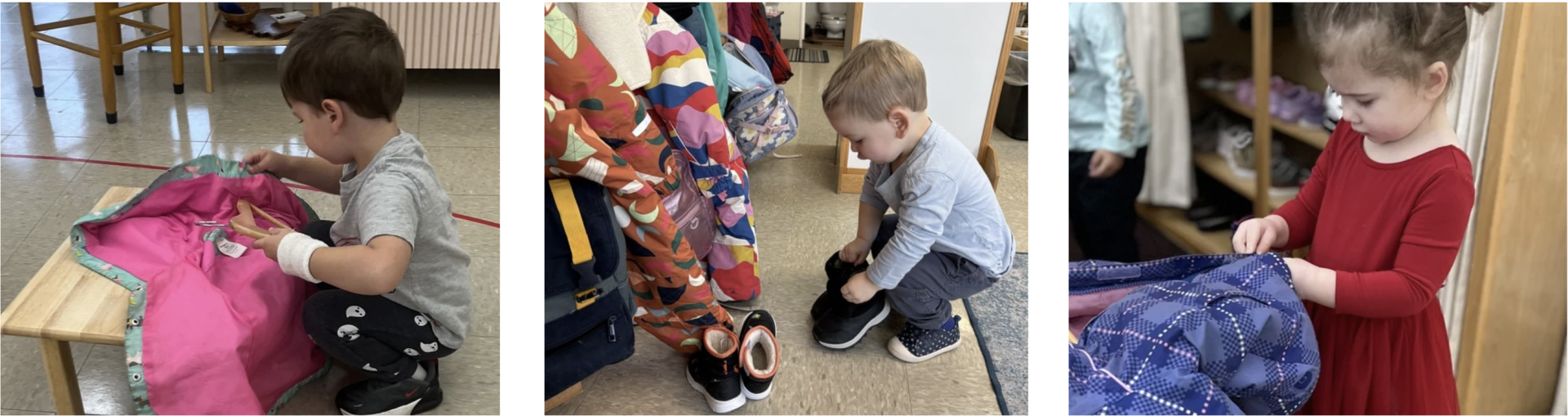
One of the most beautiful places I see this unfold is in our arrival routine each morning. Children begin their day by saying goodbye to a parent, a brave beginning to the day. Then, they carry out a quiet sequence they’ve internalized over time: taking off their outside shoes, placing their lunchbox or backpack away, choosing their indoor shoes from the closet, retrieving a hanger to put away their coat or sweater, using the bathroom, washing their hands, and finally coming to greet me, their guide. Each step is done with growing confidence and self-direction. These are not just practical tasks, they are moments of self-direction and meaningful steps towards autonomy that set the tone for their whole day.
Current research reinforces what Montessori understood long ago. Studies from institutions like Harvard’s Center on the Developing Child highlight that executive functioning, skills such as planning, focus, and self-regulation, develop through real-life practice. Children who participate in consistent, meaningful routines where they are given responsibility also tend to show stronger emotional resilience and self-confidence.
In the classroom, we witness daily moments that affirm this. One child may quietly work for days to master the skill of zipping their coat. Another may help a friend to tie a knot for their sewing card, or patiently help a younger child button up their sweater. These may seem like small acts, but they carry deep significance. The look of satisfaction when a child completes a task independently reflects genuine self-belief, earned, not given.
FROM CLASSROOM ROUTINES TO HOME LIFE
Supporting independence doesn’t require grand gestures. At home, it’s as simple as involving children in real tasks like cooking, setting the table, or watering plants. It means creating an environment they can navigate with ease, child-sized tools, low shelves, and clear expectations. Most importantly, it means slowing down, allowing time for effort, and resisting the urge to step in too quickly. Struggle is part of learning, and success achieved through persistence builds true confidence.
When we support independence in daily routines, we send a powerful message to children: You are capable. You are trusted. You are needed. And from this, their confidence and competence grow.
Quick Tips for Supporting Independence at Home
- Slow it down. Build in extra time for routines like dressing, packing bags, or cleaning up so your child can try without feeling rushed.
- Prepare the environment. Use low hooks, child-sized tools, and accessible shelves so your child doesn’t need to ask for help to get started.
- Let effort lead. If your child is trying, pause before stepping in. A little struggle is often where learning happens.
- Offer choices, not commands. “Would you like to put on your shoes or your coat first?” supports autonomy while keeping structure.
- Invite children into real work. Cooking, folding laundry, setting the table, or caring for plants all build confidence and capability.
- Keep routines predictable. Repeated sequences (like morning or bedtime routines) help children internalize responsibility and feel secure.
- Model patience. Your calm presence communicates trust and gives your child the confidence to persist.
- Celebrate effort, not speed. Acknowledge persistence and problem-solving rather than how fast a task is completed.