





The Gift of Boredom

written by Judy Maloney, YCC Guide
Why unfilled moments help children grow

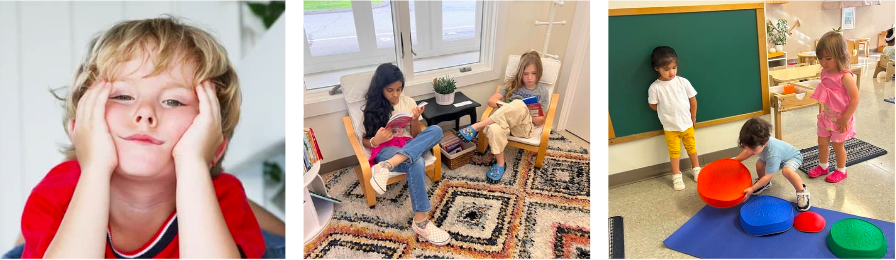
In today’s world, children are rarely without stimulation. Between busy schedules, screens, and a constant stream of toys and activities, the moments of stillness that once allowed children to imagine, reflect, and simply be have become rare. Yet in Montessori education, we see those quiet, unstructured moments, those times when a child may even appear “bored”, as powerful opportunities for growth.


Boredom as an Invitation, Not a Problem

When a toddler says, “I’m bored,” it can be tempting to quickly offer a toy, turn on a song, or find something to fill the gap. But in doing so, we may unintentionally take away the child’s chance to engage their imagination and inner motivation.

From a Montessori perspective, boredom is not the absence of activity; it is the beginning of creativity. When a child experiences a lull, their developing mind begins to search: What can I do? What can I create? How can I use what’s around me? This internal searching strengthens concentration, problem-solving, and resilience.

It’s in these unhurried moments that children discover the joy of building a tower with blocks, the fascination of watching how sunlight moves across the floor, or the satisfaction of pouring water back and forth simply to see what happens. The space left by boredom becomes the stage on which imagination and curiosity come to life.


Learning to Wait: A Foundation for Self-Regulation

Alongside the gift of boredom is another equally important skill: learning to wait. Toddlers live deeply in the present moment; waiting for a turn, a snack, or a parent’s attention can feel monumental. Yet, every time a young child waits, whether for help with their shoes or for their turn to feed the class fish, they are developing patience, emotional control, and empathy.

Dr. Maria Montessori observed that children thrive when they are given the opportunity to practice waiting rather than being constantly rushed or immediately satisfied. She wrote about the importance of the child’s “inner work,” the gradual strengthening of will and self-discipline that comes from experience, not instruction.

When we slow down and allow the child to experience waiting, we communicate an important message: You are capable of handling this feeling. You can wait, and I will be here with you while you do. Over time, this becomes the foundation for self-regulation, the ability to manage impulses, delay gratification, and persist through challenge.


Supporting These Skills at Home

You can nurture boredom and waiting in simple, everyday ways:

  • Allow pauses. If your child says, “I’m bored,” resist the urge to immediately intervene. Stay calm and curious: “Hmm, I wonder what you’ll decide to do.”
  • Model waiting. Let your child see you waiting patiently – at a red light, in a line, or while someone else speaks.
  • Create screen-free time. Protect quiet, device-free moments in your child’s day. These are often when the richest independent play emerges.
  • Honor slow transitions. Give extra time for dressing, eating, or leaving the house. The process is where learning happens.
  • Acknowledge feelings. Waiting is hard! You can empathize (“It’s so hard to wait for your turn”) while still holding the boundary.

Age-Specific Tips for Parents

For Children 15 Months–3 Years (Toddler)

  • Offer just a few simple toys at a time—rotate rather than add more.
  • Create small “yes” spaces where they can explore freely without constant redirection.
  • Narrate waiting in simple language: “First I put on my shoes, then you.”
  • Use practical life tasks—wiping spills, carrying laundry, washing vegetables—to fill natural pauses.

For Children 3–6 Years (Primary)

  • Encourage independent choices: “You may choose work from your shelf.”
  • Keep screens out of the daily routine to protect deep, creative play.
  • Introduce simple turn-taking games that require patient waiting.
  • In moments of boredom, invite observation: “What sounds do you hear?” “What do you notice outside?”

For Children 6–12 Years (Elementary)

  • Provide open-ended materials—art supplies, building tools, notebooks for inventions or stories.
  • Talk together about the value of thinking time and daydreaming.
  • Let them experience longer-term projects that require persistence and pauses.
  • Encourage them to problem-solve: “What could you try next?” rather than giving immediate answers.
Helping Toddlers Grow: Why Self-Dressing Matters in Montessori

In a Montessori environment, independence is at the heart of everything we do. Allowing children the time and space to use their own hands when getting dressed fosters confidence, coordination, and problem-solving skills. While it can sometimes be tempting to step in and do it for them, each button they fasten, each shoe they put on, and even each struggle they overcome is a meaningful step toward self-sufficiency.

By engaging in these daily routines, toddlers strengthen their fine motor skills, develop patience, and gain a sense of accomplishment. They also learn how to care for themselves, an essential component of Montessori’s Practical Life curriculum. When we resist the urge to do it for them, we send a powerful message: We believe in their capabilities.

One of the greatest gifts we can give our children is the ability to use both hands with confidence and coordination. Self-dressing is a natural and meaningful way to develop this skill, as it requires children to use both hands together. Pulling up pants, zipping a jacket, fastening buttons, and putting on shoes all strengthen bilateral coordination, which is essential for writing, cutting, and other daily tasks as children grow.

Encouraging self-dressing in the toddler years also lays an important foundation for the Primary program. In Primary, children are expected to manage their clothing independently, including changing shoes, putting on coats, and dressing for the weather. Supporting these skills now helps ensure a smoother transition, giving children the confidence to take ownership of their daily routines.

Of course, support and encouragement are always welcome—offering choices, breaking tasks into steps, or modeling movements can help. But ultimately, the goal is to empower them to take pride in their abilities and enjoy the process of learning through doing.


Cobb School Montessori’s Country Fair: A Perfect Autumn Celebration

On September 28, Cobb School Montessori welcomed community members to its annual Country Fair, celebrating 26 years of this cherished tradition that began with the vision of parents in the community. The event, run by parent volunteers and staff, brought together families to enjoy a day filled with crafts, games, and delicious food, all set against the backdrop of a perfect autumn day.

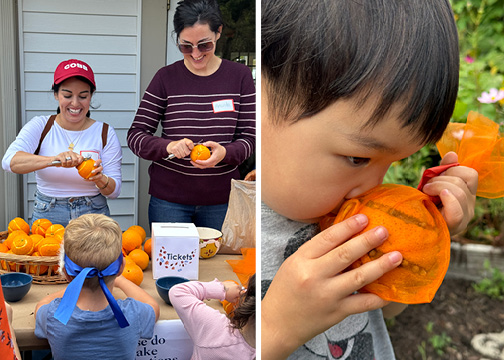
Visitors, including parents, grandparents, friends, and alumni, embraced their creativity with a variety of seasonal crafts, including orange pomanders, nature crowns, decoupage frames, nature weavings, and adorable pine cone owls. For toddlers, a delightful hay bale maze offered hours of fun, complemented by a scavenger hunt to find a magna-tile hidden in the haystack.

Adults enjoyed a selection of hot and cold beverages from Cobb Cafe, a student-run venture showcasing the entrepreneurial spirit of two sixth-year elementary students. 

The perfect weather added to the joyful atmosphere. With laughter, creativity, and community spirit in abundance, this year’s Country Fair was a memorable celebration for all involved. Cobb School Montessori looks forward to continuing this beloved tradition for many more years to come.

Bring the Fall Craft Tradition into Your Home

Orange/Clove Pomander

Parents and students loved making orange and clove pomanders at Cobb School Montessori’s Country Fair.

How to Make an Orange Pomander with Your Child

What You’ll Need:

  • 1 orange
  • Whole cloves (about 50-100)
  • A toothpick or nail (optional, for easier poking)
  • A fruit zester or sharp knife (for adult use)
  • Ribbon or string (optional, for hanging)
  • A bowl (for any mess)

Instructions:

  1. Prepare the Orange: Start with a clean orange. Wash it gently to remove any wax or dirt.
  2. Zest the Orange: Use a fruit zester or a sharp knife (with adult supervision) to make shallow channels or lines on the surface of the orange. You can create a pattern, like stripes or spirals, for a more interesting design.
  3. Poke Holes: If you prefer, use a toothpick or nail to poke small holes along the channels you created. This will help make it easier to insert the cloves.
  4. Insert Cloves: Take a whole clove and gently push it into the channels or holes. Arrange the cloves in your desired pattern, filling the orange with them.
  5. Add Ribbon (Optional): If you want to hang your pomander, tie a ribbon or string around the top of the orange. You can make a loop to hang it.
  6. Let It Dry: Place your pomander in a bowl or on a drying rack. Leave it in a cool, dry place for a week or two to let it dry out and develop its scent.

Enjoy: Once dried, hang your orange pomander in a closet or place it in a bowl as a lovely decoration that smells great!